Wednesday, 12 December 2018

The Flight from the Enchanter by Iris Murdoch

After the large amount of average and substandard fiction that I've encountered, I really wanted to read something really good again, and this book did not disappoint. I had read it before, about five years ago, so I didn't remember it very well. It's not my favourite Murdoch novel, but it's a really outstanding early one. As usual, I was completely enchanted by her mixture of realism and the fantastic or bizarre. She creates such a magical atmosphere, writing in such a seemingly grounded and even matter-of-fact way, but everything she describes seems like a fantastic world. Some parts of this novel were even grotesque and I found them somewhat disturbing to read. As often in Murdoch novels, the whole story is presided over by the mysterious figure of Mischa Fox, the enchanter, who exerts an inexplicable fascination over everyone around him. It's left ambiguously unclear whether he drives the plot and engineers all the relationships in the novel, or whether he himself is caught up in them. I know that probably, it's a sort of philosophical example for Murdoch, the result of which I can't understand due to being incredible dense about philosophy, but I don't really care, I find the mystery of the events and characters highly satisfying. I love the way Murdoch balances all the interweaving plots, and creates the elaborate internal worlds of her characters.

Saturday, 8 December 2018

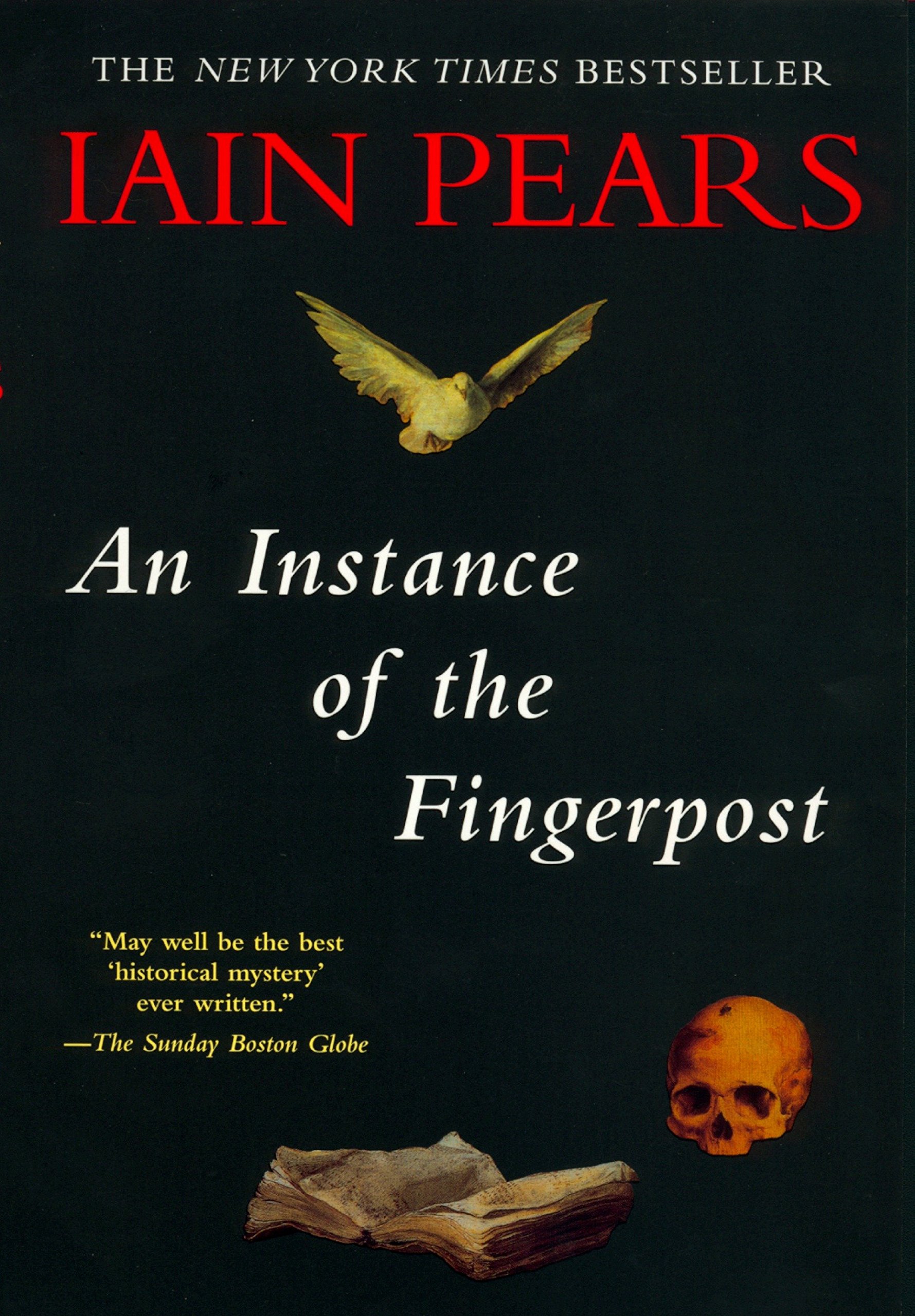
An Instance of the Fingerpost by Iain Pears

I decided to read this book because I read a review comparing it to The Name of the Rose, and I honestly have no idea why I even finished it. Iain Pears clearly knows his history, but I have grave doubts about his ability to write a balanced novel. There are just so many twists to the plot, that I couldn't keep track of them at all. It's a sort of Restoration-era murder mystery, told by four unreliable narrators, but they're unreliable to such a degree that disentangling their stories is almost impossible. The first part is the seemingly innocuous record of an Italian merchant's son travelling in England, and is so boring that I immediately forgot all the events in it that proved significant later. The other accounts involve endless conspiracy theories and political power grabs. One person thinks an assassination on the king or one of his ministers is being contemplated, the other believes he is uncovering evidence that was fabricated against his father, another thinks Charles II secretly converted to Catholicism, and if any of these are actually 'true' is impossible to say by the end. Maybe that's the point, but trying to understand what was going on and which of the endless array of characters was which gave me a headache. I didn't really like the way any of the characters were written either, they all turned into a disgusting, indistinguishable mess in my brain, except the mysterious Sarah Blundy, who may be a Quaker, a prophetess, or perhaps Christ. I did say this was confusing. I find reaching about political machinations extremely tiring, and this novel is full of them; half-implications in coversations, reading too much into what everyone says, Biblical allusions that act as a kind of code between various characters, actual code in secret letters. While someone like Dumas in The Three Musketeers can make this kind of thing incredibly exciting, this book just felt like the paranoid rambling of this lacklustre collection of characters. By the end, I really didn't care what the truth was, I just wanted the book to be over. I know that it's a clever book, with great historical insight and whatever, but honestly, I wish I had never picked it up. But I guess trying to use various scientific methods of the early modern era to attempt to solve a crime is pretty cool.

Thursday, 6 December 2018

Night's Master by Tanith Lee

So imagine if Oscar Wilde was female and decided to rewrite The Arabian Nights in a fantasy universe, and you'd get this book. I cannot believe how good it was, and I cannot believe that Angela Carter is still being forced down people's throats when Tanith Lee exists. I'd say that Tanith Lee writes the way Angela Carter thinks she writes, and the fact that everyone's heard of Carter but very few people have heard of Lee just testifies to the utter, absurd unfairness of the universe. This book comprises several tangentially interconnecting stories concerning a demon prince, who is delightfully both evil and able to love, and spends considerable time seducing human men and women alike. The writing is absolutely entrancing and almost obscenely gorgeous, I literally could not put this book down. Lee strikes a wonderful balance between originality and tradition; her stories feel somehow right and fall into a beautiful pattern, yet at the same time are highly inventive and unusual. My two complaints about the book are that some of the sexual stuff is simultaneously disturbing and too flowery (and can get a bit cringe-worthy), and also that there are too many weird names to keep track of. But other than that, it's an incredible fantasy, with the flat world of the book's universe masterfully executed and compellingly presented. I also love the constant blurring of distinctions between 'good' and 'evil' (Oscar Wilde would have been proud), and the wonderful yet somehow beautifully simple and seemingly effortless characterisation.

Saturday, 1 December 2018

The Eyre Affair by Jasper Fforde

Even though I generally don't like alternate universe fiction and dislike Jane Eyre, I enjoyed this book a lot. It's a quirky, fast-moving, fun adventure in a well-developed and creatively constructed alternate universe. It's a real treat for anyone who loves 19th century fiction (as well as most other classics, really), since it takes place in a universe where people are obsessed with books and their characters. It was really hilarious in parts, and so much fun to read. I've always thought that the bit in Jane Eyre where Jane just randomly hears Rochester's voice calling to her was stupid, and this novel provides a great explanation for it. It's got quite a bit of lovely postmodern mixing of stories and realities, and general shuffling of narratives, which was really delightful. It's also fairly madcap, as people go diving through time distortions and enter books through weird portals. And one of the villains gets imprisoned forever in a book of Poe's poetry. I may have liked it if the style was a bit denser, it felt too easy to read, but it was great fun, and I'll definitely be back for more of the Thursday Next (main character) novels.

Wednesday, 28 November 2018

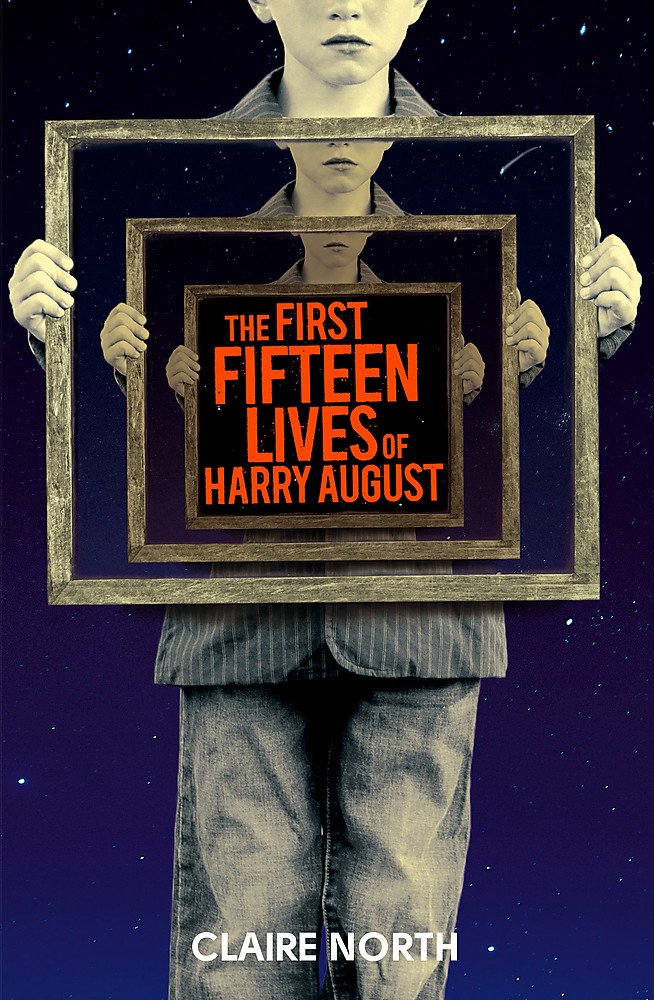
The First Fifteen Lives of Harry August by Claire North

I usually get a headache from trying to understand time travel stories, I remember watching Doctor Who and having to lie down from thinking too hard about the Doctor and River Song's movement through time. So of course, I wound up trying to think too hard about how time works in this book, but I always feel there's a certain poetry to tangled time narratives, so I enjoyed it at the same time. I don't think this book was particularly well-written or innovative, but it just kept me reading because it was a very entertaining and easy read. I'd say it was more promising than well-executed; some parts are well-written and there are interesting ideas, but it's all a bit of a mess. I felt like no part was fully flushed out, because the author was rushing to get too much in there. I thought the time travel or parallel universe element in this book was pretty original, but that might be because I don't read many books like this and have little to compare it to. I think what I liked best was the way it considers all aspects of 20th century history from different perspectives and from different countries, while I feel like most books get stuck in one country and one perspective. It seems to bear out what I always feel; that the more you know, the harder it is to believe in anything or be wholeheartedly devoted to any cause. Some parts also had a really nice, dry humour. I would have really liked there to be more emotional depth, and I found the style in which it's written deeply irritating. It uses that really-short-sentences-for-maximum-impact style, sometimes with just one word in a paragraph to really get the reader's attention. I find that very obnoxious, and when the prose got more bulky (longer sentences, more complex paragraphs) I thought the writing was much stronger.

Friday, 23 November 2018

The Swimming-Pool Library by Alan Hollinghurst

I actually picked this book up a couple of years ago and couldn't get past the first few pages, but I decided to give it another go, since I loved The Stranger's Child so much. I've never read a book that's so simultaneously filthy and terribly clever. It was a really hard read for me because I found it very hard to connect with it emotionally. I felt totally desensitized by the extremely graphic descriptions of sex, and couldn't really engage emotionally because I had sort of distanced myself. But this is a problem with me as a reader, not with the book, which is really very good. I was also bewildered by the main character's seemingly utterly insatiable sexual appetite. And I didn't realise until about three fourths of the way through the book that it takes place in 1983, so every time people were having sex, my mind was screaming 'why are you not using protection?!?!' since I didn't realise that it took place before the AIDS epidemic. I was also quite uncomfortable with descriptions of random hookups and spontaneous sex between strangers, because I can't understand why people do that. So even though I found the main character often sympathetic, I spent a lot of the book thinking 'what are you doing and why??' There were some parts that had me absolutely crying with laughter and cringing at the same time, for example, when describing the showers in a gay sports club, the narrators talks about how 'in a few seconds the hard-on might pass from one end of the room to the other with the foolish perfection of a Busby Berkeley routine'. I mean, what am image!! But most of the book was quite sad and extremely thought-provoking. It would probably take a 5000+ word essay just to start discussing all the deep, important, etc themes of this book, so I won't do it here, but it deals a lot with the shifting experiences of homosexuality in England throughout the 20th century, the patterns of persecution, secrecy and exploitation repeating through the years.

Tuesday, 20 November 2018

Of Human Bondage by W. Somerset Maugham

I enjoyed The Moon and Sixpence so much that I was really excited to read this book, since apparently it's considered Maugham's 'masterpiece'. However, I must say that I liked The Moon and Sixpence much more. This book is way too long, and rather obviously autobiographical, in that there doesn't seem to be any sustained theme, the story lacks any tension or real interest. I mostly enjoyed the style, but it's somewhat lugubrious, it feels like a real Edwardian monster of a novel, with nothing very innovative (except some rather frank talk about sex, which today is utterly unremarkable). Some parts are gorgeous and dreamy and lovely, but a lot of it is just plain. I kept reading it because I hugely identify with the main character, Philip Carey. I wouldn't say I like him (because he's a lot like me and I'm very irritated with myself), but it made me feel better to read about someone who is so exactly like me (extreme shyness and reserve, propensity for falling obsessively in love with worthless people, spends way too much time pointlessly philosophising about life and drawing depressing conclusions). Funnily enough, I also, like Philip, am rather good at art, but I also feel that I lack any remarkable talent, and don't want to pursue it because I will never be anything other than mediocre. However, I found a lot of views about women in this novel fairly repulsive (the way they're always dismissed as inferior and stupid, good for nothing but having children), and I actually had a lot of sympathy with Mildred, a working-class girl Philip falls hopelessly in love with and also despises. Philip often blames Mildred for not responding to his advances enthusiastically, for not being passionate enough, for using men for her own entertainment and advantage, but I felt like it was her response to a world that uses all women, especially working-class ones, cruelly, so why should she be enthusiastic and obliging? I felt like Mildred was a case of a Thomas Hardy-type female character; specifically written by Maugham as stupid, shallow and selfish to associate these qualities with female independence, self-assertion, and violent responses to the way they are treated. In another Thomas Hardy-like instance of a sort of masculine 'poetic justice', Mildred ends up as a prostitute and (presumably) dying of syphilis, while Philip manages to carry on and assert his masculinity elsewhere, rather than learning some damn humility from his experience with Mildred. However, there are some really well-written and interesting parts, especially Philip's torturous adoration for Mildred, which often spills over into violent impulses (which he doesn't act on) and hatred. It's also a really interesting documentation of the details of late Victorian and Edwardian life of a large variety of classes, ages and places. Philip is, at various times, a schoolboy in a fairly elite school, a sort of 'study abroad' student in Germany, an art student in comparatively bohemian Paris, a medical student in London, and a worker in a shop, and all of these places and situations, the daily life and overall tone of the places, are described in great detail, which I found interesting, but I think people who aren't interested in the period would find it rather tedious.